On July 31st a Korean edition of Real-Time Rendering will be available for purchase from the Kyokobook store, YES24 online bookstore, and Aladin online bookstore.
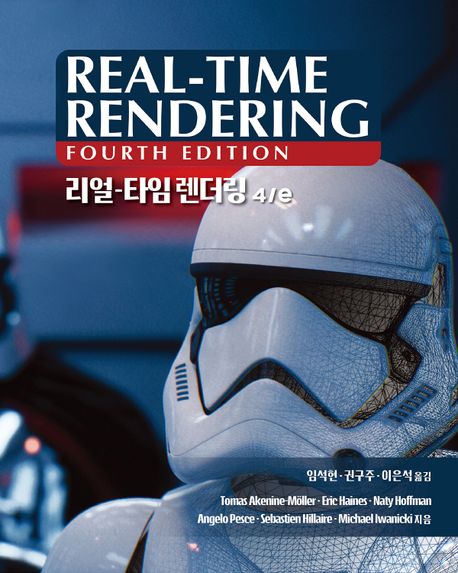
On July 31st a Korean edition of Real-Time Rendering will be available for purchase from the Kyokobook store, YES24 online bookstore, and Aladin online bookstore.
The indefatigable Ke-Sen Huang has collected links for papers at both HPG 2023 and EGSR 2023:
HPG at https://www.realtimerendering.com/kesen/hpg2023Papers.htm – includes direct links to recordings
EGSR at https://www.realtimerendering.com/kesen/egsr2023Papers.htm
I’ve heard both were well-attended this year (and I’m sad I missed them – it didn’t time out), with about 150 attendees at EGSR, something of a record.
Elena Garces and I are co-chairing papers for EGSR 2024, so keep up the great work and interest, all! I would expect the papers deadline to be around April, similar to this year’s Call for Papers deadlines.
It turns out that, at the bottom right of the project page I pointed to in my previous post, there’s a link to a Windows implementation of their system. I hadn’t noticed that; thanks to James Hung-Kuo Chu, first author of the work, for the tip-off. He has a nice example of a colored QR code on his web page.
The Windows program works! Set a URL or text to search, upload a picture, ask for a QR code.
Here’s an example. Blur your eyes to help you figure out what well-known computer graphics image it represents. I find you’ll want to have the QR code be not very large in your camera’s view for it to be detected as one.
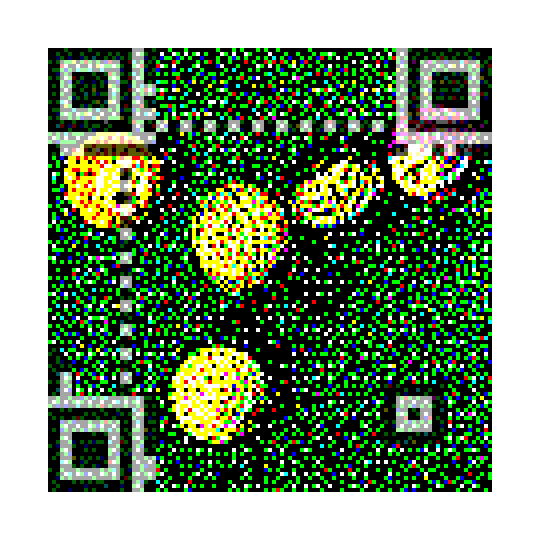
A smaller one, of me. Again, blur eyes. When changing the size it’s likely best (?) to “pixel resize” (sample and hold, etc.), not resampling.

Addendum: James Hung-Kuo Chu, the first author on the paper, noted that using the “Apply contrast enhancement” can give a better result. Here’s one with that:

Addendum 5/28/2023: I just noticed this article, pointing to another QR image generator. The color one’s more fun, IMO, but I wanted to scribble down where this other tool is.
And addendum 6/7/2023: this cool QR maker guided by Stable Diffusion (thanks to Andrew Glassner for pointing it out). Actual creator tool here.
Also, 12/14/2023: a research topic is to make a 2D barcode that tries to be more aesthetically pleasing than a QR code. Me, I think that ship has sailed – adopting a new barcode format seems unlikely – but, interesting topic and a view of “what might have been.”
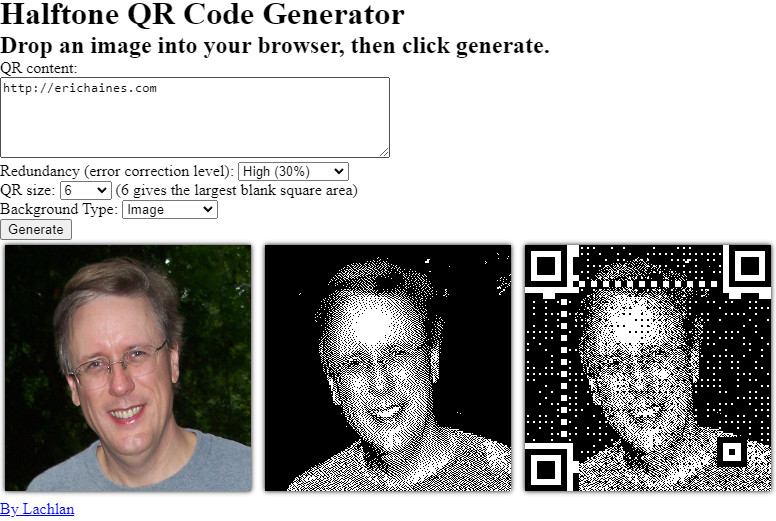
In talking with Niloy Mitra, I noticed he had a cool QR code on his page. I asked him about it, he pointed me to this decade-old work he coauthored. Searching a bit more, I found a cute web browser version for making your own. It’s a bit flaky, in that a lot of the images I tossed in look really bad half-toned. Maybe if I had a clue what the options were it’d come out better. But, with one it worked pretty well! I just put in the URL I want the code to lead to.
Addendum: but wait, there’s more! Another generator, from the author, that also permits color output. See my next post.
Like it says. Hotel reservations for SIGGRAPH 2023 are now open: https://s2023.siggraph.org/travel-accommodations/ – from what I see, you can cancel cost-free up to the end of July. So, if there’s any chance you’ll go, lock it in now. To save you a click, SIGGRAPH is August 6-10 in Los Angeles.
It’s SIGGRAPH’s 50th year, so I expect a fair bit of retrospective stuff. In fact, the Electronic Theater is accepting such material until May 1st, so if you’re of an age, dust off those VCR tapes for submission.
I3D 2023 is back to being in-person, first time since 2019. May 3-5, hosted at the Unity office in Bellevue, WA, USA.
The last in-person I3D was in 2019. I helped chair the conference on-line in 2020 and 2021, and 2022 was also remote. We survived, good work got published, but half the joy of any conference is meeting with people, new and old.
The nice thing about on-line conferences is that they cost just about nothing. Which means all the money we raised from sponsors in 2019 and later is available for this year’s conference. Almost all sponsors generously rolled over their donations each year for the time when the conference would again be in person. That time is now! I don’t know, but suspect there should be a fair number of new people attending this year, as there was money in 2020 (before COVID hit) for student travel grants and outreach programs.
Please spread the word and retweet.
Today’s theme is interactive mash-ups and remixes:
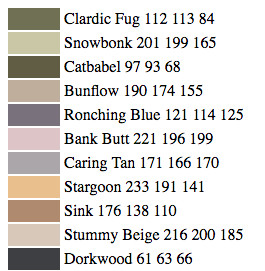
Let’s focus on colors. We’re in, we’re out, it’s quick, unlike yesterday’s post:
Time to catch up with too many links collected this past year. Today’s theme: interactive web pages. Plus, bonus nostalgia!
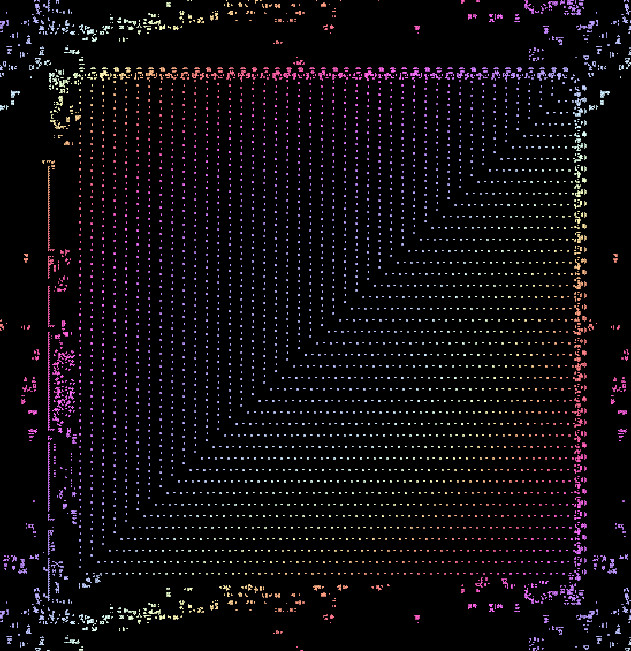
What’s really happening in a single cell in Life:
I asked Andrew Glassner if he had the original paper issues of the Ray Tracing News available. He replied, “About an hour ago I entered the vault, filled with nitrogen to prevent decay, put on the fiber-free white gloves, and was allowed to view the original manuscripts.” In other words, he found them in some box (I suspect I have them in some different box, too, somewhere…). He kindly scanned all four and they’re now available as PDFs, hosted here.
Andrew started this informal journal for us ray tracing researchers immediately after SIGGRAPH 1987, where he had organized the first “ray-tracing roundtable.” It was no mean feat to gather us together, check the email list at the end of the first issue. Tip: I’m no longer at [email protected]. Delivery was like the Pony Express back then.
Having these (virtually) in hand makes the Ray Tracing News collection online complete, sort of like catching all the Pokémon. It’s nice to have these publications available on the web now. I enjoy seeing ideas such as Jim Arvo’s simulated annealing and Paul Heckbert’s minimal ray tracer where they first appeared.
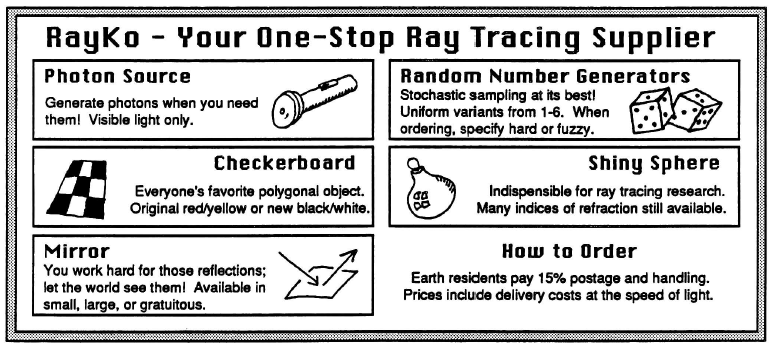
And, the issues have filler cartoons, made by Andrew – these follow. Hey, I enjoyed them. Ray tracing is not a rich vein of comedy gold; there isn’t exactly an abundance of comics on the subject (I know of this, this, and this one, at most – xkcd and SMBC, step up your game. Well, SMBC at least had this, and xkcd this).
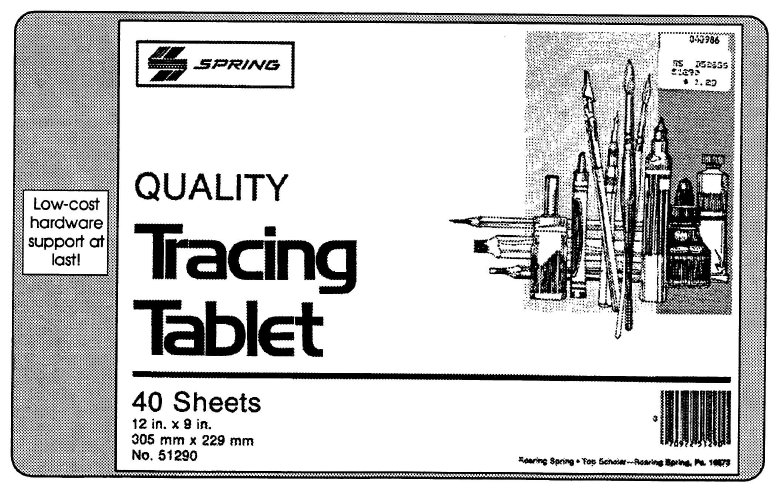
We finally, a mere 30-odd years later, have tracing tablets (if you view some Shadertoys on an iPad).